
Truck tire blowouts can result from under-inflation, excessive weight, heat, road debris, potholes, worn tires, or poor maintenance. Prevent them by checking tire pressure and condition, maintaining proper tread, avoiding overloading, and inspecting tires regularly. If a blowout occurs, stay calm, keep control, avoid sudden braking, ease off the accelerator, and move safely off the highway. Once stopped, turn on your hazards, use warning devices, stay away from traffic, contact roadside assistance, and have the tire professionally inspected or replaced before continuing.
A truck tire blowout can turn an ordinary highway drive into a dangerous situation within seconds. At highway speeds, a sudden loss of tire pressure can make the steering wheel pull, the truck vibrate, or the trailer sway unexpectedly. Knowing how to respond calmly and correctly can make a significant difference in keeping the truck, the load, and other drivers safe. Under-inflation, excessive heat, overloaded axles, road debris, worn tires, and poor maintenance can all cause tire failures.
This article explains the most common causes of truck tire blowouts, the warning signs drivers should watch for, and how to respond to them calmly. It also covers what to do after pulling over, including how to get roadside assistance, protect your load, document the incident, and find nearby tire repair or towing services through SemiDown.
What Are Truck Tire Blowouts, and What Do They Look Like?
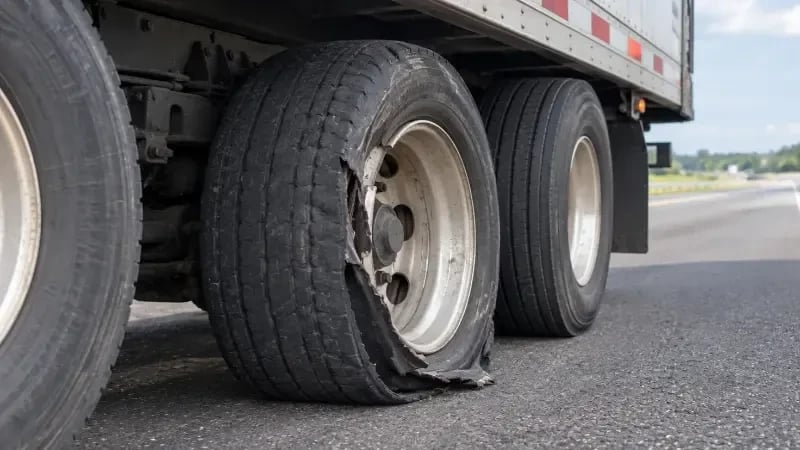
A truck tire blowout is a sudden loss of air that causes a loud bang, vibration, pulling, or a sudden change in handling. Visually, you may also see shredded tread, torn sidewalls, exposed cords, or tire debris on the road. Unlike a slow flat, a blowout can affect the truck’s stability almost immediately.
Key risks include:
- Reduced steering and stability
- Jackknife or rollover
- Danger to nearby vehicles
- Serious crashes
- Vehicle and cargo damage
What Causes Truck Tire Blowouts?
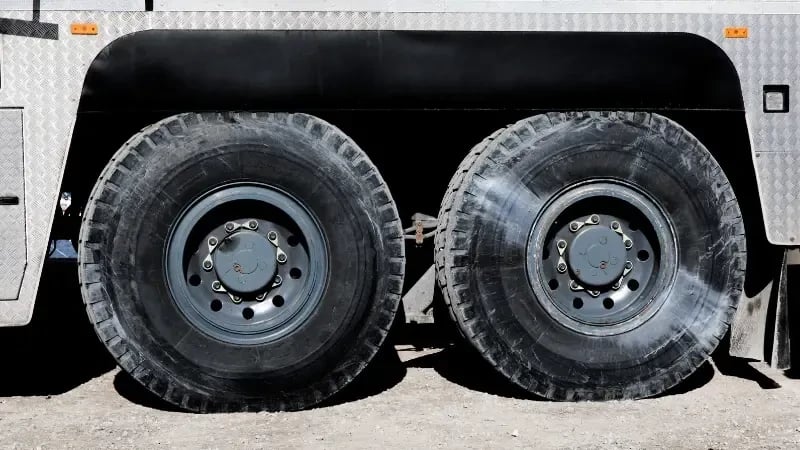
Tire blowouts typically result from heat, damage, or weight. The causes below are the ones truckers and trailer owners run into most often.
Under-inflation
When a tire is low on air, it flexes excessively, building up massive internal friction and heat. Over time, the heat weakens the tire's internal structure until it fails, especially at highway speeds or in hot weather. On a truck, this is easy to miss because an underinflated tire can look perfectly normal from the driver's seat.
To prevent sudden tire blowouts on a highway, never rely on a visual inspection alone. Check tire pressure with a physical gauge at every wheel position, including the trailer tires and those often-forgotten inside duals.
Overloaded Trucks and Tire Stress
Every tire has a stamped load rating, and pushing past it is a fast track to a blowout. When a truck carries too much weight, the tires flex the sidewalls excessively and generate extreme internal heat. Steer tires and trailer axles usually take the brunt of the stress and burn first.
Overloading also brings scale tickets, fines, and possible out-of-service orders. Uneven weight distribution can overload a single axle even when your gross weight looks legal, so check axle weights before you leave the dock.
On the US Interstate Highway System, weight limits are strictly governed by federal law:
- Maximum Gross Vehicle Weight (GVW): 80,000 pounds
- Single Axle Limit: 20,000 pounds
- Tandem Axle Limit: 34,000 pounds
A classic example is pulling onto the highway with a legal gross weight of 78,000 pounds. However, the shipper loaded heavy steel coils too close to the rear doors. Your trailer tandems now spike to 38,000 pounds, forcing those trailer tires to carry 4,000 pounds over the legal federal limit.
At 65 mph on hot asphalt, this concentrated weight increases the risk of tire overheating and disintegration. Beyond the blowout risk, a DOT inspection will trigger hefty fines and an automatic out-of-service order. Never rely on gross weight alone; always scale your individual axles before leaving the dock.
Road Debris and Potholes
Metal, old tire chunks, and other sharp debris can cut a sidewall or weaken it enough to fail later. Potholes and hard curb strikes can break internal cords that you cannot see from the outside. Even a small object can do real damage at highway speed, and the sidewall is more sensitive than the tread.
If you run over something large, do not shrug it off. Inspect the tire at your next safe stop, because it may not fail until miles later.
Worn, Aged, or Damaged Tires
Low tread reduces traction and adds heat. Federal rules set the minimum tread depth at 4/32 of an inch for steer tires and 2/32 of an inch for other tires, although many fleets replace tires well before that point. However, to protect their vehicles and cargo, many fleet operators replace tires long before they reach these legal limits.
Tread depth isn't the only factor to watch. Rubber naturally degrades over time; environmental exposure can structurally weaken a tire six to ten years into its lifespan, even if it looks like it has plenty of remaining tread. If your fleet utilizes retreads, ensure your tire shop performs routine, rigorous casing inspections.
Finally, treat any sidewall bulge or blister as an immediate hard stop. These deformations mean the tire’s internal integrity has completely failed, leaving it vulnerable to a catastrophic blowout at any moment.
Poor Maintenance and Mismatched Duals
Slow leaks, uneven wear, and poor alignment all add stress to a tire over time. With dual tires, one underinflated or flat tire forces the other to carry more weight, increasing the risk of failure.
Cause | What Happens | Early Warning Sign |
|---|---|---|
Underinflation | Excess flexing creates heat and weakens the tire | Low pressure or TPMS alert |
Overloading | Excess weight strains the tire | Heavy axle loads or hot tires |
Road debris and potholes | Impacts can cause cuts or hidden damage | Vibration or slow leaks |
Heat and speed | Higher temperatures increase tire stress | Excessively hot sidewalls |
Worn or damaged tires | Weak rubber is more likely to fail | Low tread, cracks, or bulges |
Poor maintenance | Small problems can develop into failures | Uneven wear or pulling |
How to Respond to a Truck Tire Blowout on a Highway?

A tire blowout can happen without warning, but your priority is to stay calm and maintain control of the truck. Avoid slamming on the brakes or making sudden steering corrections, as these actions can make the truck harder to control. Instead, ease off the accelerator and let the truck slow gradually. Once the truck is stable and your speed has dropped, brake gently, check your mirrors, and move toward a safe stopping area.
Step 1: Stabilize, Pull Over and Secure Your Rig
The first 10 minutes of a truck or trailer breakdown are critical. At this point, stabilizing your vehicle is your best bet; hold the steering wheel and accelerate slowly to maintain control.
Maintain steady pressure on the accelerator momentarily to stabilize the rig and prevent jackknifing; firmly grip the wheel, then gradually ease off the gas to let the truck slow down naturally.
Afterwards, move to the safest location available, such as a wide shoulder, exit ramp, rest area, or truck stop. Avoid stopping on curves or hills when possible. Once stopped, turn on your hazard lights and set the parking brake. Place your reflective warning triangles as required, and stay in a safe location away from moving traffic.
Step 2: Assess the Damage and Get Help
Do not continue driving on a damaged tire. From a safe location, check what happened and determine whether you can safely service the truck on-site. If there is an injury, fire, hazardous material spill, or if the truck is immobilized and blocking a live lane of traffic, call emergency services first to secure the scene. For a typical tire failure, contact a tire repair or mobile service provider and notify your dispatcher.
Have the following information ready when requesting assistance:
- Exact Location: Note the highway name, direction of travel, and the nearest exit or mile marker. If possible, pull the exact GPS coordinates from your logging device or smartphone map.
- Vehicle Identification: Have both the truck and trailer unit numbers ready, along with your company's breakdown account details.
- Tire Position and Specifications: Clearly identify which tire failed using precise positions, such as the right rear outer drive or left trailer front inner dual. Note the tire size and wheel type if visible.
- Visual Documentation: Take clear photos of the tire, the road debris, and any secondary vehicle damage, if safe to do so. This information helps the technician prepare for collateral repairs and speeds up the insurance claim process.
Step 3: Decide Whether You Need a Repair or a Tow
A roadside tire service may be appropriate when the truck is safely stopped, and the tire can be changed on-site. You may need a tow if you are in a dangerous location, the steer tire is affected, or the blowout has caused wheel-end, brake, suspension, or other vehicle damage. If you are unsure whether the truck is safe to move, wait for a qualified technician to assess it.
Step 4: Find the Nearest Tire Service
One of the fastest ways to respond to a truck tire blowout emergency is to get support from the right service provider. If your vehicle doesn't need a tow truck, a mobile roadside technician can handle several repairs on the shoulder, as long as the location is safe. Typical on-site repairs include mounting a new or retreaded tire, swapping out a bent or cracked wheel rim, replacing damaged valve stem, and making minor fixes to torn mud flaps or severed rubber air lines.
A breakdown directory plays a key role in connecting drivers with the right repair shop near the shoulder. SemiDown can help you find nearby tire repair shops, mobile tire technicians, and towing providers when you need roadside assistance. Instead of searching through old contacts, use the SemiDown directory to find a reliable tire service near you.
How to Prevent Tire Blowouts on a Highway
On a loaded rig, a blowout can mean damaged air lines, a wrecked fender, and a lost steer axle on top of the tire itself. By establishing a strict routine before you hit the road, you can catch critical flaws early and keep your truck moving safely.
Run a Real Pre-Trip Tire Check
Your pre-trip tire check should cover these inspection points.
Items | Inspection checks |
|---|---|
Pressure | The correct PSI on every tire, checked cold with a gauge |
Tread depth | At or above the legal minimum, with even wear |
Sidewalls | Cuts, bulges, cracks, and scrapes |
Duals | Both tires matching in pressure and wear |
Valve stems and caps | Damage, missing caps, or leaks |
Wheel ends | Signs of excessive heat, hub oil leaks, or loose/missing lug nuts |
Debris | Stones, metal, or other objects stuck in the tread |
Manage Weight and Prevent Truck Loading Injuries
Keep your load within legal and rated limits as specified by DOT weight limits, and balance the weight across your axles. Overloaded trucks wear tires faster and are far more likely to fail.
Loading matters for people as well as for tires. Truck loading injuries often result from rushed loading, awkward lifting, and shifting freight. Drivers who have to move or rebalance freight after a roadside problem face the same risks. Use proper lifting technique, ask for help with heavy pieces, and secure the load before you roll.
Slow Down and Steer Clear of Debris
Speed increases heat and shortens your reaction time. Scan well ahead, leave plenty of space, and steer around anything that looks like a chunk of old tread when it is safe.
Different tires fail differently, so here is what to expect and what to do next.
Tire That Failed | Possible Symptoms | What to Do Next |
|---|---|---|
Steer tire | A strong pull to one side, heavy steering, and difficulty maintaining directional control | Keep a firm grip on the steering wheel, avoid sudden braking, and stop in a safe location. Arrange roadside service or towing before continuing. |
Drive tire | Thumping, vibration, or reduced traction; handling may also be affected | Gradually slow down and pull over when safe. Have the failed tire and surrounding components inspected before continuing. |
Trailer tire | Sway, thumping, or tire debris visible in the mirrors; some failures may go unnoticed initially. | Check your mirrors, maintain control, and stop in a safe location. Arrange an inspection of the tire, wheel, and surrounding components before proceeding. |
Does Insurance Cover Truck Tire Blowouts and Road Debris Damage?
Review your insurance policy or speak with your agent ahead of time to avoid stress during an emergency.
Here is how coverage generally works when a truck tire blows or hits road debris:
- Tire wear-out failures are generally not covered, but damage from road hazards may be, depending on your policy.
- If the blowout causes a crash, your collision or liability insurance may cover the resulting accident.
- Roadside assistance can help pay for immediate towing or an on-shoulder tire change.
- Keep photos, receipts, and timestamps to protect yourself against late-delivery penalties from receivers or to prove the claim to your insurer.
Road debris insurance questions come up when something on the road causes the failure. Coverage for debris damage varies by policy type and carrier, so confirm the details with your insurer. Keep your photos, receipts, and timestamps in every case.
What Should Be in Your Truck Tire Blowout Kit?
A well-stocked kit makes a roadside stop safer and shorter. Keeping these items in the cab is a good place to start:
- Three reflective warning triangles
- High-visibility safety vest
- Fire extinguisher (5 B:C or higher)
- Wheel chocks
- Heavy-duty jack
- Breaker bar and lug wrench
- Tire pressure gauge
- LED headlamp with fresh batteries
- Heavy-duty work gloves
- Needle-nose pliers
- Emergency rations (water, blanket, non-perishable food)
Frequently Asked Questions
Conclusion
Truck tire blowouts are scary, but they are often preventable. By maintaining the correct cold inflation pressures, strictly observing weight limits, and thoroughly inspecting your tires at every stop, you eliminate the primary causes of tire failures. If you experience a sudden blowout, grip the steering wheel firmly to keep the vehicle straight, resist the urge to slam on the brakes, and let it slow down before guiding it safely onto the shoulder.