
Quick answer: Summer heat pushes engines past what their cooling system can handle, especially on long grades where more horsepower means more heat. Low coolant, a clogged radiator or charge air cooler, a stuck thermostat, or a weak water pump can make it worse. Clean the cooling stack, check the coolant and thermostat, and if the needle starts climbing, ease off the throttle, turn off the AC, and pull over before it turns into a breakdown.
Scorching summer temperatures push heavy-duty engines to their absolute limits, risking costly delays and permanent engine damage. If you are watching the temperature gauge climb toward the red zone, your truck is overheating, and you need to stop immediately. In this article, we will walk through the main truck engine overheating symptoms, tips for cooling it down, pre-trip engine checks, and how to get roadside help in case of a breakdown.
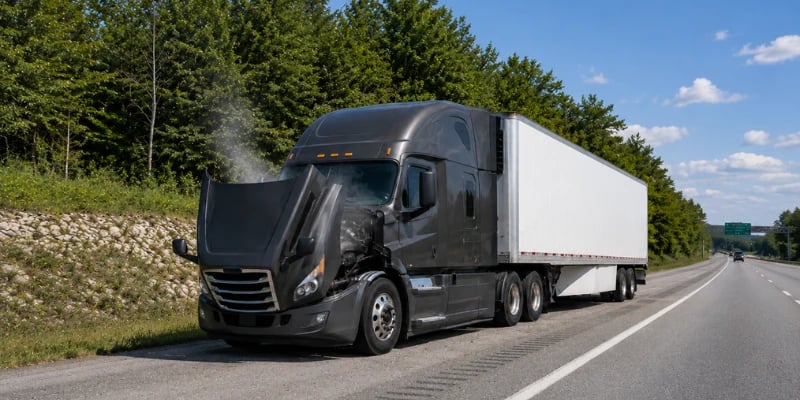
What Causes a Semi Truck to Overheat in Summer?
A Class 8 diesel generates a lot of heat under normal conditions. The cooling system is built to handle that. Coolant absorbs heat from the engine, the radiator sheds it into the air, and a fan and water pump keep everything moving. Summer heat raises the baseline temperature the system is working against. However, on a hill with heavy loads and non-stop traffic, there's less margin for error.
Any one of the following can turn that thin margin into an emergency roadside breakdown.
Low Coolant or a Slow Leak That Gets Ignored
This is one of the common causes of overheating and the easiest to miss. A hose clamp working itself loose, a hairline crack in the surge tank, a water pump weep hole, or a damaged radiator cap. On a 95-degree afternoon with a full load, that same small loss of coolant leaves not enough fluid to carry the heat away fast enough.
A Dirty Cooling Stack
Most of the time, bugs, road film, and dust build up on the surface, quietly choking off airflow and reducing the cooling efficiency of the radiator, charge air cooler, and AC condenser.
To clean it, blow out or gently wash accumulated debris from between the condenser, CAC, and radiator using low-pressure water or compressed air (spraying from the engine side outward). For heavy buildup, components may need to be unbolted or separated for a thorough flush.
The Engine Can't Breathe
A clogged air filter forces the engine to burn a richer fuel mix, which runs hotter. A soot-packed muffler makes exhaust work harder to escape, adding even more heat. Neither shows up on a coolant check, but both raise your engine's baseline temperature before summer heat even kicks in.
A Thermostat Stuck Closed
The thermostat controls when coolant is allowed to flow to the radiator. If it sticks closed, coolant just recirculates inside the engine and never gets cooled. Temperatures climb fast, often within minutes of startup, and the upper radiator hose stays cool to the touch even while the gauge is climbing. That mismatch, hot gauge, cold hose, is a telltale sign of a semi-truck heating up.
A Weak Water Pump
Your semi truck's cooling system relies on a water pump to circulate coolant internally and a fan clutch to pull air through the radiator externally. When the water pump weakens, coolant stops working, causing the engine to overheat constantly, especially during highway driving or heavy climbs. You might notice fluid leaks or a grinding noise. When the fan clutch fails, the fan won't spin when the engine gets hot, so overheating shows up mainly at idle or in slow traffic, since there's no natural wind to cool the radiator, and the fan's usual "roar" goes missing.
How to Cool an Overheated Semi-Truck Engine Quickly
If the temperature gauge is climbing right now, here’s what to do:
Adjust How You're Driving
If the needle starts climbing on a grade, try driving differently.
- First, turn off cruise control so you're managing the throttle yourself instead of letting the ECM demand full power to hold your speed. Ease off and let your speed drop a little; less throttle means less heat generated.
- Counterintuitively, keep RPMs up rather than lugging the engine at low RPM under load; this spins the water pump and fan fast enough to actually move coolant and air. Turn off the AC first, since it adds load the engine doesn't need.
If the needle keeps climbing anyway, turn the heater on full blast. It sounds backward, but the heater core works as a second radiator, pulling extra heat out of the coolant loop.
Should I Turn Off My Truck if It Heats Up?
Get to a safe shoulder, but don't shut the engine off right away. Bump the idle up slightly and let it run; this keeps the water pump and fan working and protects the turbo.
Shutting off a hot engine kills oil circulation instantly, which can damage turbo bearings still at extreme temperature. Wait until the needle drops to normal before shutting down or continuing.
Exception: If steam is pouring out or you smell coolant burning, shut it down immediately. Never touch the radiator cap while the engine is hot, as pressurized coolant causes serious burns.
How Long Does It Take for a Truck to Stop Overheating?
Give the engine at least 30 to 45 minutes before touching any component. A full cool-down to ambient temperature takes longer, often up to 2 hours before it's safe to open the radiator cap or coolant reservoir, and up to 4 hours or more for the engine block itself to fully return to outside temperature. Heat, engine size, and heavy loads further extend the time-frames.
Can a Semi-Truck Engine Recover From Overheating?
Yes, if you catch it early and shut things down before it goes critical. The risk climbs sharply when temperatures exceed 250°F, or if the engine runs dry for more than a few minutes. That’s when you start seeing blown head gaskets, warped cylinder heads, or scored cylinder liners.
After any real overheat, get a professional inspection to confirm normal oil pressure, oil free of coolant, and stable temperatures once the actual cause is fixed, whether that's a thermostat, hose, or radiator. Those are the real signs the engine came through fine.
Quick Glance: Steps to Take When Your Semi-Truck Engine is Overheating
Stage | Action | Impact |
|---|---|---|
Needle climbing on a grade | Turn off cruise control, ease off throttle | Less throttle demand means less heat generated |
Needle still climbing | Keep RPMs up, don't lug the engine | Keeps water pump and fan moving fast enough to work |
Needle still climbing | Turn off AC, then heater on full blast if needed | Removes load, then pulls extra heat from coolant loop |
Engine overheated, no steam or smell | Pull over, bump idle up, don't shut off | Keeps pump/fan running, protects turbo bearings |
Steam or coolant burning smell | Shut down immediately | Safety exception to the "don't shut off" rule |
Any time engine is hot | Never touch the radiator cap | Pressurized coolant causes serious burns |
After shutdown | Wait 30-45 minutes before touching anything | Coolant stays pressurized, block stays hot longer than gauge suggests |
Adding coolant early | Use overflow reservoir only | Radiator cap still under pressure |
Overheating caught early | Usually recovers fine | Brief spike, quick response, minimal risk |
Overheating ignored or repeated | Risk of real damage | Warped heads, blown gaskets, possible rebuild |
Mobile Repair vs. Towing
Summer heat and an overheated truck engine are the worst combination to encounter when cruising long stretches. In such cases, deciding between a mobile truck repair and towing to the shoulder can be stressful. Here’s how each option fits your needs, depending on your priority.
Save Time with Mobile Repairs
In case of a stuck thermostat, a cracked hose, or a tiny coolant leak, you do not have to go to the workshop. Mobile technicians dispatch quickly with the right tools and make the needed adjustments right at your place. For minor repairs, call a mobile mechanic and get your truck fixed in 1-2 hours, without tow fees, queues, or a wasted day. One caveat to note is how you search for the right repair shop. In the heat of the moment, you typically make common mistakes when booking a mobile repair service; Before booking, check their certification, request written estimates, and verify their online reviews.
Tow Trucks for Serious Damage
A cracked head gasket, a seized water pump, or internal engine damage means you need a tow truck service. Driving just one mile with such problems might create a bigger problem. During the peak summer season, when workshops are overwhelmed with calls regarding overheating engines, it is crucial to be able to differentiate between them.
This is where knowing what's actually nearby helps. When you're stuck on the shoulder, spending an hour calling around isn't an option. Using a specialized breakdown directory like SemiDown lets you instantly locate verified mobile mechanics or heavy-duty tow providers nearby, helping you make the right call in minutes.
10 Pre-Trip Inspection Steps to Prevent a Summer Roadside Emergency
A five-minute check before hitting the road helps prevent major breakdowns on the way. Here’s what matters to keep your semi-truck from overheating.
- Coolant level and color - Don't just check the level, check the color too. Rusty or brown coolant is past due for a flush; adding more won't solve that.
- Hose condition - Squeeze the upper and lower radiator hoses by hand. Soft, spongy, or cracked means it's close to failing, not just aging.
- Radiator cap seal - A worn cap can't hold system pressure, and a system that can't hold pressure can't cool properly, even with everything else in good shape.
- Cooling stack airflow - Bugs, dust, and road grime cake onto the radiator and charge air cooler fins over a season. Clear it out before summer heat exposes it.
- Belt tension - A loose or worn belt means the water pump and fan aren't spinning at full speed, and neither one works right at half effort.
- Fan clutch response - Engine off, spin the fan by hand. It should resist, not spin freely. Freely spinning means it won't pull air when you actually need it to.
- Oil and coolant cross-contamination - Oil showing up in the coolant, or coolant in the oil, is an early flag for a head gasket problem, not something to top off and ignore.
- Coolant type match - Check what's already in the system before adding more. Mixing conventional and extended-life coolant cancels out the corrosion protection in both.
- Dash warnings and early gauge movement - Confirm your warning lights actually function, then watch the temp gauge for the first 15 minutes on the road. A slow creep on a normal route is a telltale sign of overheating.
- A spare jug of the right coolant - Not a fix for a real leak, just enough to drive your rig to the shop.
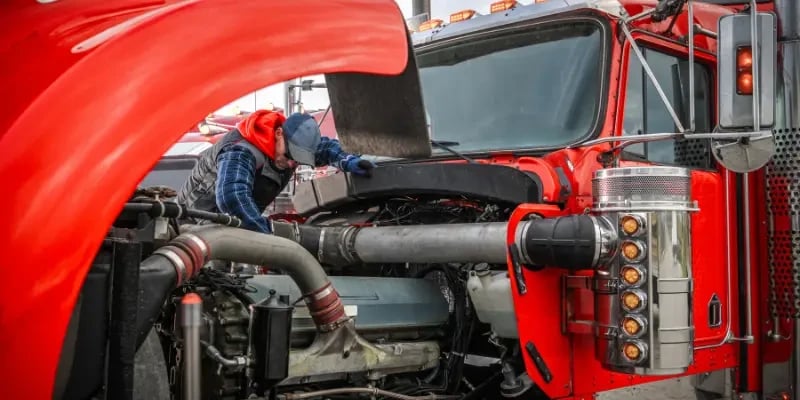
The Real Cost of Skipping Cooling-System Service
For fleet managers, engine overheating isn't just a driver-safety issue; it's a budget line item, too. Regular maintenance and cooling-system service checks are equally important. A cooling-system service typically costs between $300 and $550, while a real overheat, especially one that reaches the water pump or engine, can run well into $2000, sometimes far more if it turns into a rebuild. Incorporating cooling-system checks into seasonal PM is generally cheaper than dealing with a replacement or rebuild on the highway.
Frequently Asked Questions
The Bottom Line
Your truck’s engine is overheating for several reasons. It typically overheats when something prevents it from shedding heat as fast as it's making it, usually low or leaking coolant, a failing water pump, a clogged radiator, or a broken thermostat that won't let coolant flow. Heavy loads, hot weather, and long grades make the engine produce more heat than usual, so any one of those problems shows up faster under that kind of strain. Check coolant level and condition regularly, keep the radiator clear of bugs and road debris, and don't ignore a rising temperature gauge; pull over and let it cool rather than pushing through. If the engine overheating symptoms persist, it's best to call for roadside help or look for mobile repair services through a breakdown directory.