Emergency breakdowns and regular truck maintenance repairs are part and parcel of every trucker's job. Whether you own a fleet or a single truck, the most crucial decision you make is finding a reliable repair shop for breakdowns. But your choice determines whether you face a quick fix or a financial disaster.
Truck owners often trust the wrong technician or choose a less expensive repair service when in panic. The result? Repeated breakdowns and higher long-term costs.
A truck repair breakdown directory, however, helps truckers and fleets avoid such pitfalls.
Here are the most common mistakes truckers make when choosing a shop and how to avoid them in 2026.
Common Mistakes Truckers Should Avoid When Choosing a Repair Shop
An unreliable truck shop can only increase your costs and lead to misdiagnosis. Here’s what happens when truckers choose the wrong repair shop.
1. Missing out on Specialized Technicians
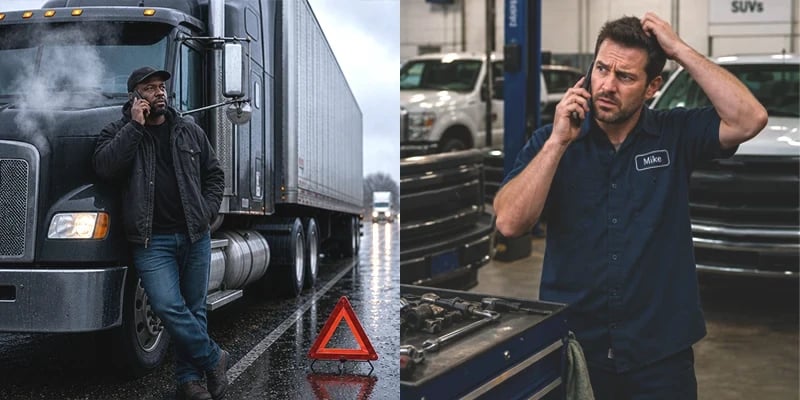
Among the most common mistakes, truckers often assume any mechanic can handle any breakdown. Light-duty or pickup truck technicians are trained differently from heavy-duty truck technicians to repair large commercial rigs.
Therefore, it is essential to confirm that the technician has deep expertise, the right tools, and specific knowledge of your truck model.
Here’s how to find a reliable, specialized repair shop:
Service Category | What to Look For in a Qualified Shop |
|---|---|
Truck Breakdowns | Experts in DPF cleaning, transmission rebuilding, wheel alignment, and axle replacement. |
Trailer Repair | Facilities equipped for electrical systems, brakes, suspension work, and structural welding. |
Tire Services | Heavy-duty tire machines, on-site tire inventory, and laser wheel alignment tools for accurate, fast service. |
Refrigeration Units | Solid in electrical troubleshooting, compressor failures, and temperature-control systems. |
Towing & Recovery | 24/7 availability with heavy-duty towing, rotator units, and air-cushion recovery capable of handling loaded rigs safely. |
Parts Support | On-hand inventory of bearings, brake components, oil filters, batteries, and standard wear parts.
|
2. Failing to Verify Truck Shop’s Certification (ASE)
For truck owners, we aren’t emphasizing the need to check the paperwork here. We want them to select an ASE (Automotive Service Excellence) because it directly impacts uptime and the quality of work.
ASE-certified technicians skip the guesswork and focus on hands-on repair. They’re trained to identify the root cause of failures, handle complex systems such as DPFs, transmissions, and axle replacements, and complete repairs correctly.
.webp&w=3840&q=85)
Here’s what to look for in a truck repair shop:
- For heavy‑duty truck repair, look for ASE T‑series certifications, with T2–T8 (Master Medium‑Heavy Truck) as the primary benchmark.
- Verify a technician’s standing by entering their name and ASE ID in the ASE Verification Tool.
- Certifications expire every 5 years; ensure their credentials haven’t expired and that they are up to date with the latest 2026 technology.
3. Not Checking Online Reviews and Reputation
Another common truck repair mistake is selecting the nearest and cheapest option without doing any research. Analyzing Google, Yelp, Reddit, trucking forums, and Better Business Bureau BBB reviews is imperative. It helps truck and trailer owners gain real insights into repair quality, instances of overcharging, and customer complaints.

Reading online reviews can help you understand:
- Reports of inflated invoices, misalignment, or parts that don’t match the original diagnosis.
- Complaints about repeated repairs or part failure
- Customers are talking about poor customer service
Quick Tip: A reliable truck & trailer repair shop is often identified by detailed reviews, not generic praise. Customers who genuinely like the service attach images, list the parts they had repaired or replaced, and describe the final result.
4. Not Asking Clear Questions About Warranty
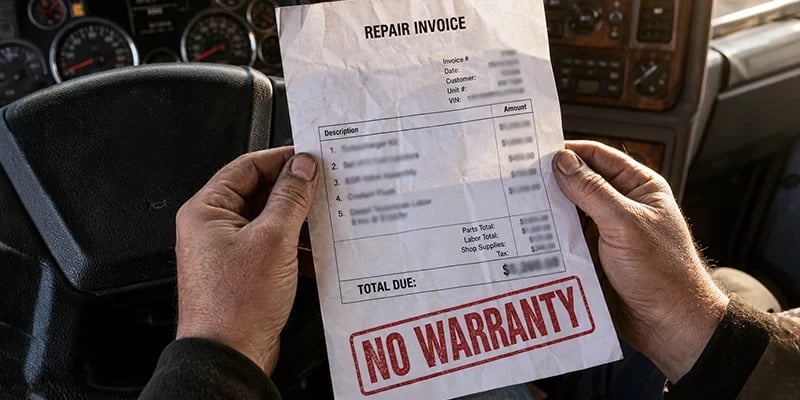
Many truck owners overlook confirming parts and labor warranties after a repair. A reliable repair shop clearly explains its warranty terms, typically 90 days or 5,000 km from the date the part is repaired or replaced. They also include clear information about claims, coverage period, and repair locations on the invoice. Shops that dodge warranty questions or fail to respond promptly after service are strong indicators of unreliability.
5. Trusting a Verbal Quote Over Written Estimates
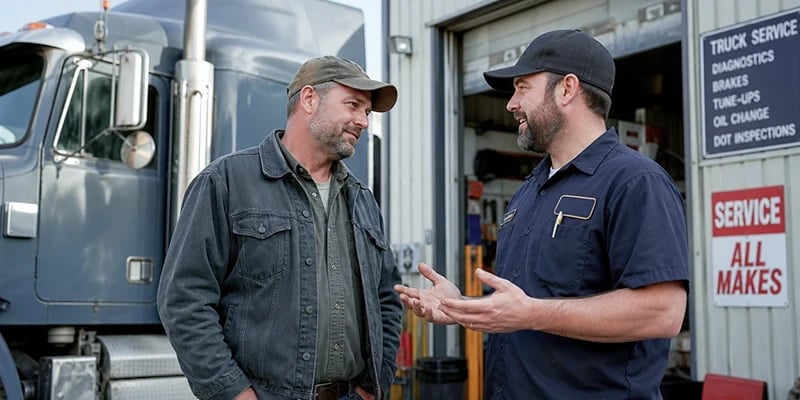
A reliable truck & trailer repair shop will always provide a clear invoice with a breakdown of all components. Truck owners should confirm that the invoice matches the original estimate, ensuring no additional labor or parts were added without discussion.
If a shop solely focuses on verbal estimates, it’s a strong sign of an anomaly.
Here’s what to check when you receive an invoice at a repair shop:
- Client name (truck owner), contact number, and email address in a proper format.
- Invoice date and number
- Repair shop name, physical address, phone number, and business contact information
- Description of service (Eg, DPF cleaning), part names, quantity, and unit prices for each replaced component
- Labor hours
- A clear total cost, including tax, that matches the approved estimate, with no hidden fees.
6. Price Becomes the Only Deciding Factor
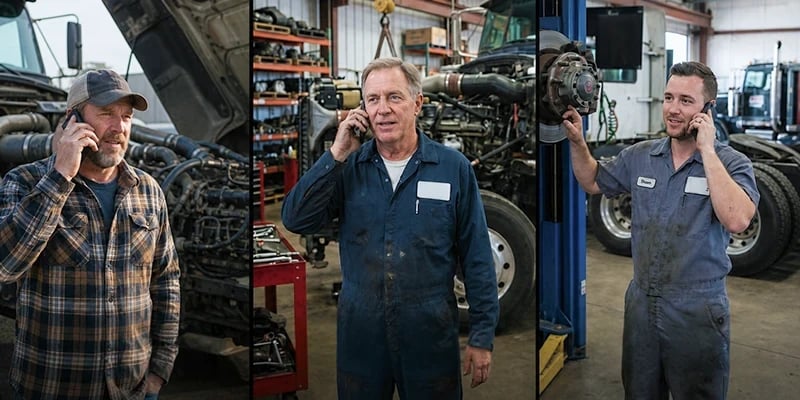
Price matters, but it shouldn't be the only factor guiding your choice of truck repair shop. The cheapest option can become expensive if the same problem recurs. Truck owners often choose the least expensive option, compromising on quality. An ideal way to choose the right truck repair shop is to compare at least three mechanics. Get quotes from three truck shops and compare their services, parts inventory, customer service, and reviews. These factors, along with price, matter for quality repairs. The one where you won’t expect repeated failures and poor truck repair service.
7. Ignoring Tools and Diagnostic Equipment
Outdated technology and equipment can misread fault codes, leading to misdiagnosis. Trust repair shops that keep their tools up to date for efficient truck maintenance and regular truck repairs.
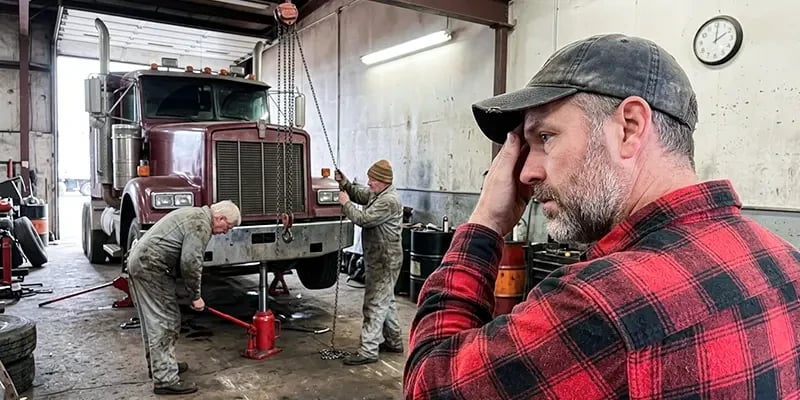
A genuine and up-to-date truck repair shop typically has these basic tools for repairs:
- Heavy-duty diagnostic scanner for reading codes and running tests on DPF systems.
- Hydraulic lifts and jack stands for lifting and supporting heavy-duty commercial trucks.
- Computerized wheel alignment and balancer sized for commercial truck tires and rims.
- Socket sets, torque wrenches, and axles for drivetrain repairs.
- Hydraulic press and pullers for hubs, bearings, and bushings.
- Electrical test equipment for ECM and wiring faults.
How a Truck Repair Directory Helps Truckers Find a Reliable Shop
A well-structured truck breakdown directory helps fleets identify which shop best fits their needs. The primary role of a repair directory is to connect truckers with reliable shops. Instead of browsing hundreds of shops on the search page, a directory helps them filter the best ones by service.
When browsing a truck repair directory, always verify the following:
- Clear shop contact details, including address, services, website, and hours of operation.
- Technician certifications.
- Verified reviews and ratings from on-road truckers.
- Specializations (diesel engines, towing, truck wash, transmissions, reefer units, etc.).
- Warranty information and payment policies.
Final Truck Repair Tips For Owners
As a commercial vehicle owner, peace of mind during a breakdown starts with choosing the right shop, not the nearest or cheapest one. An unskilled or dishonest technician can leave you with a failed part and larger bills later. That’s one mistake to avoid when repairing trucks. Next, always inspect the facility, look for ASE or equivalent certifications, and confirm that the techs know your equipment inside and out. Remember, customer testimonials and recent Google reviews are key to telling the truth and helping you differentiate between a reliable and an unreliable truck repair shop.